Marketing Strategy vs. Marketing Plan: Why You Need Both
Learn the difference between a marketing strategy and a marketing plan—and why both matter. Align your direction and execution for real marketing results.
THE HOW'S
10/22/20252 min read
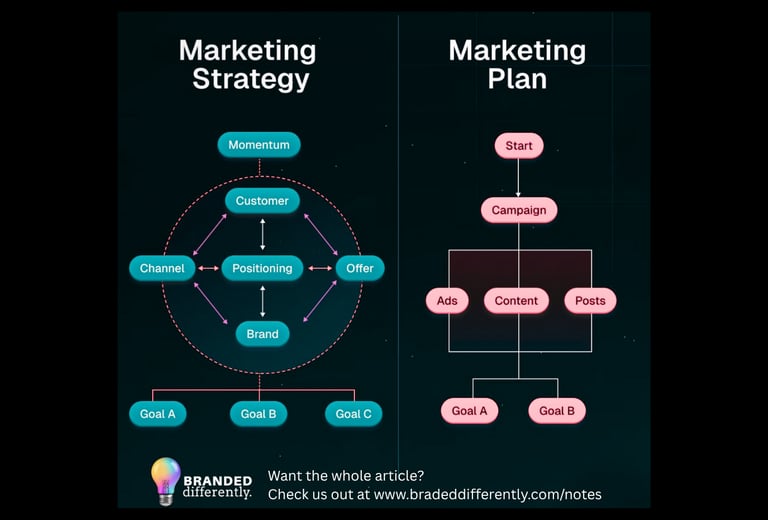
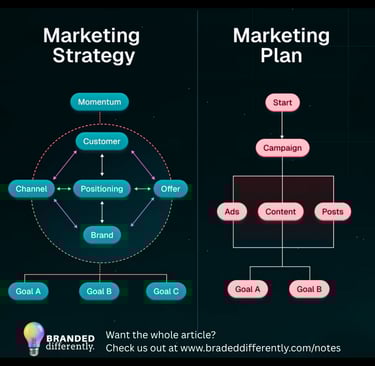
It’s easy to confuse a marketing strategy with a marketing plan. Many teams jump straight into content calendars, ad campaigns, and social posts—only to realize later that their efforts lack cohesion and direction. The truth is, even the most well-executed plan can fail without a clear strategy guiding it.
Let’s break down the difference and how both work together to drive results.
1. Marketing Strategy: The Compass That Guides You
Your marketing strategy defines the why and how behind your efforts. It’s the overarching framework that sets the direction for your marketing journey. Without it, you might be running fast—but in the wrong direction.
A strong marketing strategy connects these key elements:
Customer: Who are you targeting, and what do they truly value?
Positioning: How do you want your brand to be perceived in the market?
Brand: What story and identity are you consistently communicating?
Channel: Where will you reach your audience most effectively?
Offer: What’s your value proposition—why should they choose you?
Momentum: How do you sustain growth and engagement over time?
Your strategy ensures every campaign, post, and ad connects back to a unified purpose. It’s about understanding your customers, defining your voice, and choosing the right battles to win in your market.
2. Marketing Plan: The Roadmap That Gets You There
Once the strategy sets your direction, the marketing plan maps the what and when. It’s the tactical execution layer that brings your strategy to life through campaigns and deliverables.
A strong marketing plan typically includes:
Campaigns: The organized efforts tied to business goals.
Ads, Content, and Posts: The practical tools that drive awareness, engagement, and conversion.
Timelines and Metrics: When you’ll execute and how you’ll measure success.
If your strategy defines the destination, your plan defines the vehicle, route, and pit stops along the way.
3. Why Both Matter
Imagine trying to build a house without blueprints. That’s what executing a plan without a strategy looks like. On the other hand, having a strategy without a plan is like owning blueprints but never breaking ground.
The synergy between the two is what creates real momentum:
Your strategy builds consistency and clarity.
Your plan builds action and accountability.
When both are aligned, your marketing becomes not just busy—but effective.
4. Takeaway
A clear strategy sets the compass. A thoughtful plan charts the path.
Together, they turn good ideas into measurable results.
Before launching your next campaign, pause and ask:
Does this align with our positioning and brand?
Are we reaching the right customer in the right channel?
Do our tactics ladder up to our long-term goals?
If the answer is yes—you’re not just executing marketing. You’re executing Smart Marketing.
Would you like me to adapt this post for LinkedIn (with a shorter, conversational tone and hashtags), or keep it as a long-form blog version for your website?


©Branded Differently 2025. All rights reserved.